History

Lake Garda has a rich and storied history dating back thousands of years. The lake and its surrounding areas have been inhabited since prehistoric times, with evidence of human settlements from the Bronze Age.

During the Roman era, Lake Garda (known as "Lacus Benacus" in Latin) was an important strategic location. The Romans built villas along its shores and established trade routes connecting northern Italy with the rest of the empire. Many of the towns around the lake, including Sirmione, still bear evidence of this ancient heritage with well-preserved Roman ruins.

In the Middle Ages, the lake region became a contested area between various Italian city-states and European powers. The Scaliger family, who ruled Verona, built numerous castles along the lake's shores, many of which still stand today as testament to the region's medieval past.

Throughout the Renaissance and into modern times, Lake Garda has attracted artists, writers, and travelers from around the world, drawn by its natural beauty and temperate climate.
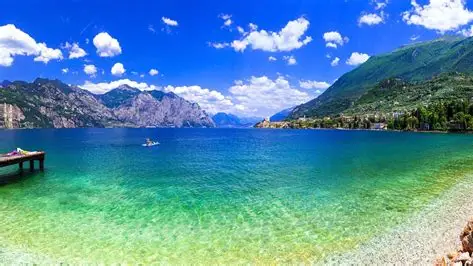
Historic castle overlooking Lake Garda

Geography

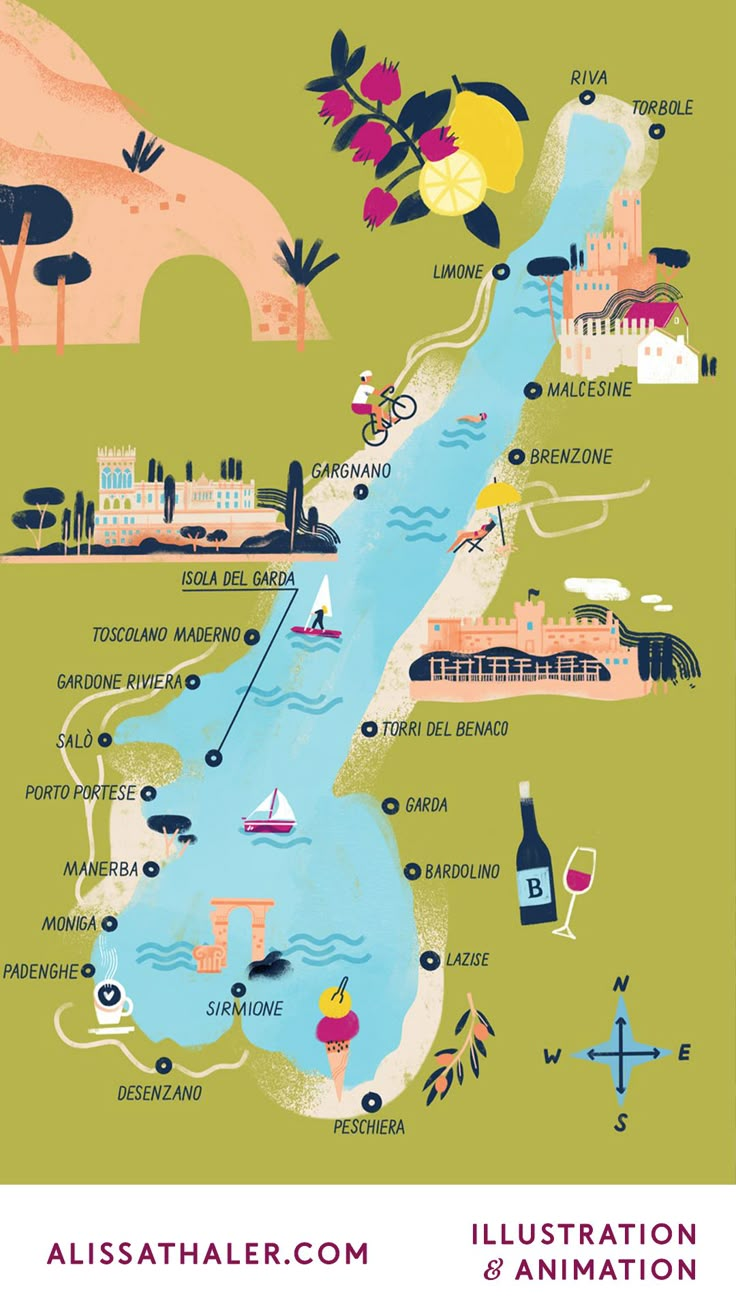
Lake Garda is Italy's largest lake, covering approximately 370 square kilometers (143 square miles). It is located in northern Italy, nestled between three regions: Lombardy to the west, Veneto to the east, and Trentino-Alto Adige to the north.

The lake is roughly 52 kilometers (32 miles) long and 17 kilometers (11 miles) wide at its widest point. Its unique shape resembles a fjord, with the northern part being narrow and deep, while the southern part is wider and shallower.

The lake's depth reaches up to 346 meters (1,135 feet), making it one of the deepest lakes in Italy. It is fed by the Sarca River at the northern end and drained by the Mincio River at the southern end, which eventually flows into the Po River.

The surrounding landscape is dramatically varied: the northern shores are dominated by the steep cliffs of the Alps, while the southern shores feature gentler, rolling hills and fertile plains. This geographical diversity creates a unique microclimate that makes the lake region ideal for agriculture, particularly olive groves and vineyards.

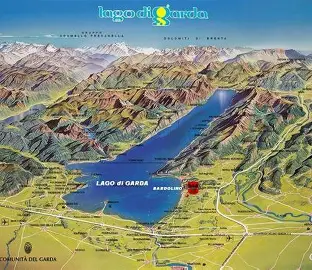
Aerial view of Lake Garda showing its geographical features

Lake Garda Location

Map showing Lake Garda location in northern Italy

Location Details

  • Region: Northern Italy
  • Coordinates: 45°38'N, 10°40'E
  • Surface Area: 370 km² (143 sq mi)
  • Maximum Depth: 346 m (1,135 ft)
  • Length: 52 km (32 mi)
  • Width: 17 km (11 mi)
  • Surrounding Regions: Lombardy, Veneto, Trentino-Alto Adige

Cultural Facts

🌡️

Climate

Lake Garda enjoys a Mediterranean climate with mild winters and warm summers. The lake acts as a natural temperature regulator, creating a microclimate that allows for the cultivation of Mediterranean plants like olives and lemons, despite being at the foot of the Alps.

  • Average summer temperature: 25-30°C (77-86°F)
  • Average winter temperature: 5-10°C (41-50°F)
  • Annual sunshine: 2,000+ hours
📅

Best Time to Visit

Lake Garda is a year-round destination, but each season offers different experiences. Spring and autumn are ideal for sightseeing and outdoor activities, while summer is perfect for water sports and beach activities.

  • Spring (April-June): Mild weather, blooming flowers, fewer crowds
  • Summer (July-August): Warm weather, peak season, water activities
  • Autumn (September-November): Pleasant temperatures, harvest season
  • Winter (December-March): Cooler weather, Christmas markets, skiing nearby
🍋

Local Culture

The Lake Garda region is rich in local traditions, cuisine, and festivals. The area is famous for its olive oil production, wine-making, and lemon cultivation. Each town has its own unique character and local specialties.

  • Olive oil production dating back to Roman times
  • Traditional lemon houses (limonaie) in Limone
  • Local festivals and events throughout the year
  • Excellent cuisine featuring fresh lake fish and local produce